What Are the Problems That Impact People in Your Family, Community, State, Country, and World?
Whether it'south turning promises on climate change into activity, rebuilding trust in the financial organisation, or connecting the world to the internet, the Globe Economic Forum has singled out x central global challenges that, if they are to exist addressed, require cooperation from the public and individual sectors.
Hither is a guide to the 10 challenges, and why they matter to the world.
By 2050, the world must feed 9 billion people. Yet the demand for food will exist 60% greater than it is today.
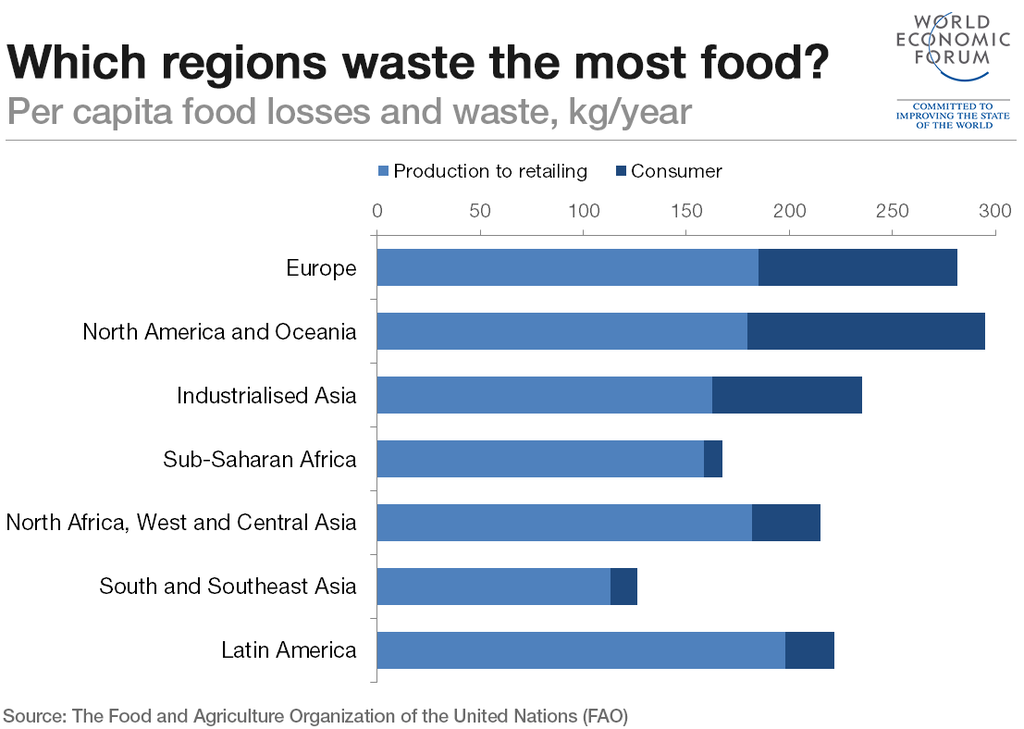
The United nations has set catastrophe hunger, achieving nutrient security and improved nutrition, and promoting sustainable agriculture as the second of its 17 Sustainable Development Goals (SDGs) for the yr 2030.
To achieve these objectives we will need to address a host of issues, from gender parity and ageing populations to skills development and global warming.
Agriculture sectors will have to become more productive past adopting efficient business models and forging public-private partnerships. And they need to become sustainable past reducing greenhouse gas emissions, water use and waste product.
The risks if nosotros neglect? Malnutrition, hunger and even conflict.
The push for economical growth in recent decades has led to substantial increases in wealth for big numbers of people across the world. But despite huge gains in global economic output, there is evidence that our current social, political and economical systems are exacerbating inequalities, rather than reducing them.
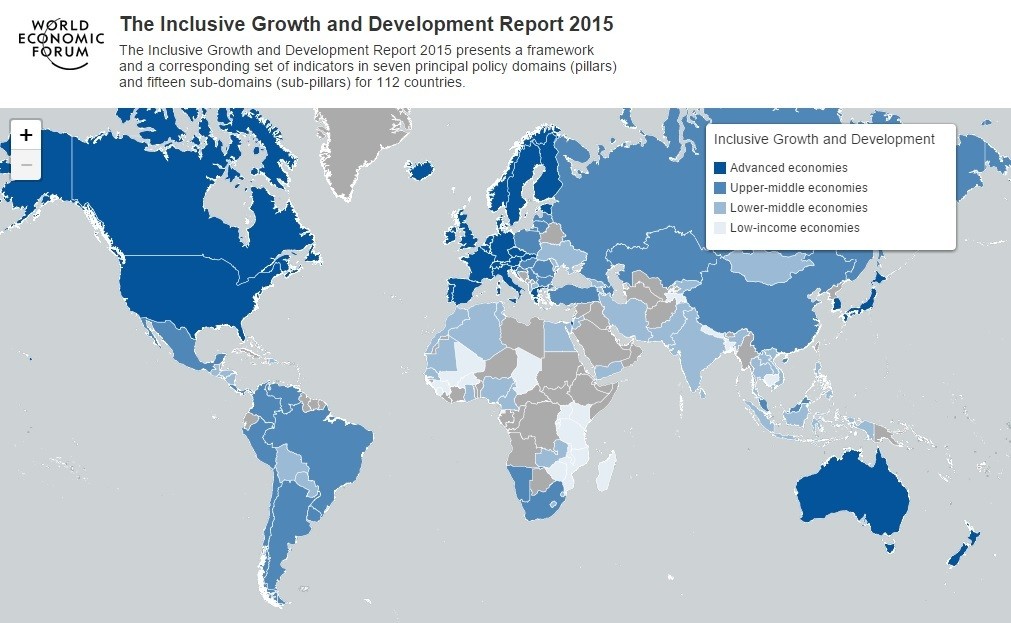
A growing body of research also suggests that rising income inequality is the cause of economic and social ills, ranging from low consumption to social and political unrest, and is dissentious to our future economic well-being.
In order to boost growth and counter the slowdown in emerging markets, nosotros need to step upwards efforts around the globe to accelerate economical activity and to ensure that its benefits reach everybody in social club.
The calibration of the employment challenge is vast. The International Labour Organization estimates that more than 61 1000000 jobs have been lost since the kickoff of the global economic crisis in 2008, leaving more than 200 million people unemployed globally.

Nearly 500 million new jobs will need to be created past 2020 to provide opportunities to those currently unemployed and to the immature people who are projected to bring together the workforce over the next few years.
At the aforementioned time, many industries are facing difficulty hiring qualified staff. One 2015 survey found that, globally, 38% of all employers are reporting difficulty filling jobs, a two-percentage betoken rise from 2014.
Put simply, we need jobs for the hundreds of millions of unemployed people around the world, and we need the skilled employees that businesses are struggling to observe.
The Earth's average land temperature has warmed nearly 1°C in the past 50 years as a result of act, global greenhouse gas emissions have grown past virtually lxxx% since 1970, and atmospheric concentrations of the major greenhouse gases are at their highest level in 800,000 years.

We're already seeing and feeling the impacts of climate change with weather events such as droughts and storms becoming more frequent and intense, and changing rainfall patterns. Insurers gauge that since the 1980s conditions-related economical loss events take tripled.
Policy-makers have been brash by the Intergovernmental Panel on Climate change that there is a high risk of catastrophic climate change if warming is not express to ii°C.
The celebrated agreement reached in Paris in December 2015 outlines a global commitment to keep warming to 2°C and to strive to limit global temperature ascension to 1.five°C.
Under the agreement, every land volition implement its own climate action plan that will be reviewed in 2018 and and so every five years to ratchet up appetite levels. Wealthier countries also committed to deliver significant flows of money and technical support to help poor countries cope with curbing their greenhouse gas emissions and adapt to climatic change.
The globe has agreed what is to be done. At present information technology is time for implementation.
The global financial crisis revealed meaning weaknesses in the financial system and some of the vulnerabilities that tin upshot from having such an interconnected global market.
Several years after the crunch, the world economy is all the same struggling with slow growth, unconventional monetary policy in major economies, and constrained government budgets. It is vital that nosotros find ways of making the financial arrangement more resilient and able to withstand shocks in the market.
The crisis too acquired a significant drop in levels of public trust and confidence in fiscal institutions. To office efficiently, the system needs to re-institute that trust.

Providing admission to credit and savings is a major challenge in the battle against global poverty – yet 2 billion people do non take access to high-quality, affordable financial services. Additionally, in that location are 200 million modest and medium-sized enterprises worldwide that take no access to formal fiscal services.
The challenge is to create a resilient, accessible financial system that people trust.
The cyberspace is changing the way we live, work, produce and swallow. With such extensive accomplish, digital technologies cannot assist but disrupt many of our existing models of business organisation and authorities.
Nosotros are entering the age of the Quaternary Industrial Revolution, a technological transformation driven past a ubiquitous and mobile net. The challenge is to manage this seismic change in a manner that promotes the long-term wellness and stability of the internet.
Within the next decade, it is expected that more than a trillion sensors volition be continued to the internet.
By 2025, x% of people are expected to be wearing clothes continued to the cyberspace and the first implantable mobile phone is expected to be sold.
If almost everything is continued, it will transform how nosotros exercise concern and help u.s.a. manage resources more efficiently and sustainably.
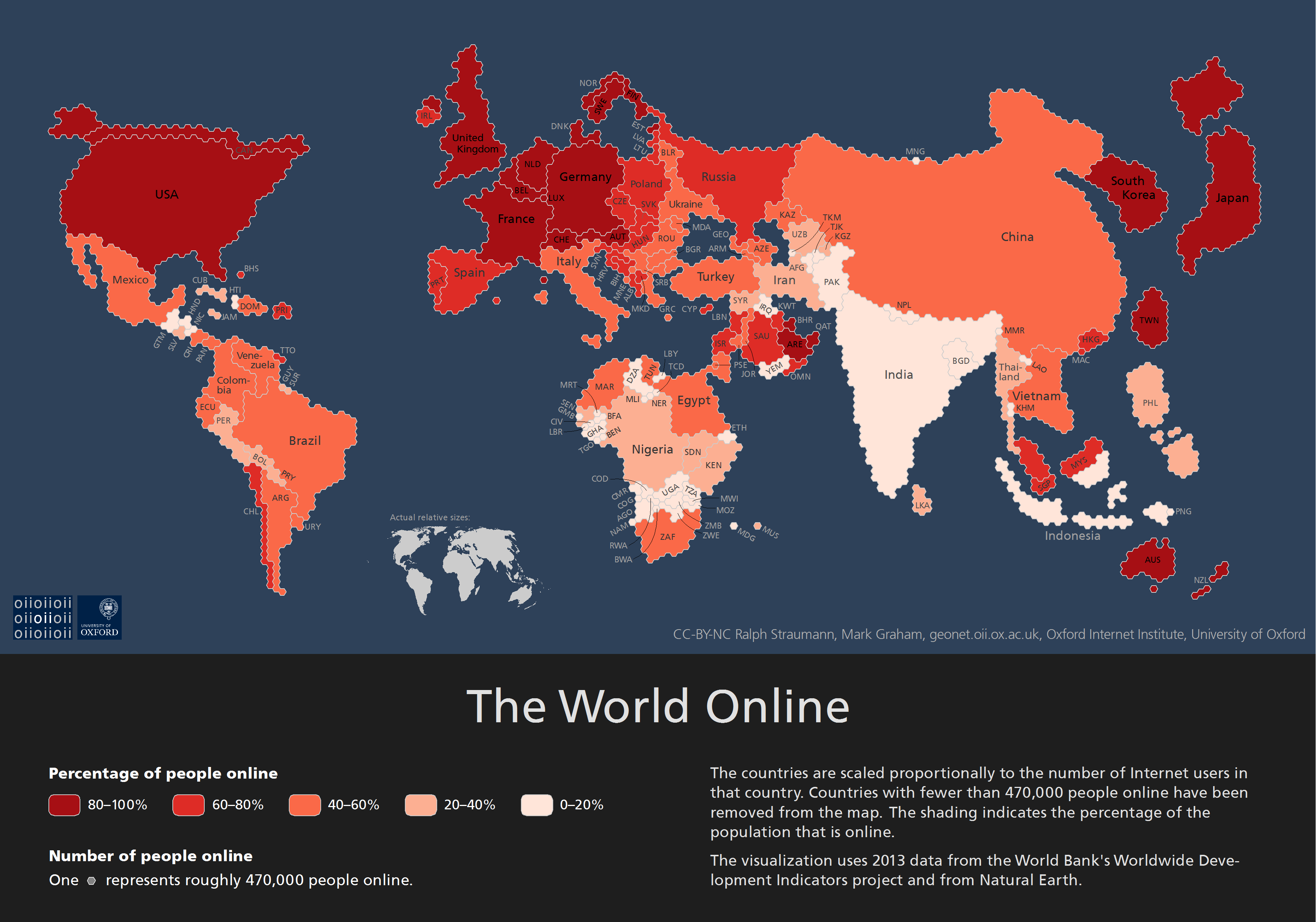
Merely how will this bear on our personal privacy, information security and our personal relationships? Today, 43% of the world's population are continued to the internet, mostly in developed countries. How will we achieve the United Nations' goal of connecting all the earth's inhabitants to affordable net by 2020?
Achieving gender equality isn't just a moral result – information technology makes economic sense. Equality between men and women in all aspects of life, from access to wellness and education to political power and earning potential, is fundamental to whether and how societies thrive.
Although nosotros are getting closer to gender parity, change isn't happening fast enough. For the by decade, the Globe Economic Forum been measuring the pace of alter through the Global Gender Gap Written report, and at current rates, it would take the world another 118 years – or until 2133 – to close the economic gap entirely.

There has been a significant increase in awareness of the importance of gender parity and much has been done past international organizations, civil social club, governments and business.
However, oft the work centres on single-outcome awareness-raising campaigns. Existing work likewise frequently involves either cooperation between different public bodies or different individual bodies.
More than needs to be done to bridge the gap and facilitate cooperation between the public and private sectors.
International trade and investment are vital drivers of economical growth. With the size and shape of the world economy changing dramatically in recent years, traditional patterns of trading and investing accept had to rapidly evolve alongside it. The challenge is to ensure that the regulatory framework keeps up.

There have been so many changes in the way we exercise business. The growth of the digital economy, the rise of the service sector and the spread of international production networks take all been game-changers for international trade.
As well as this, foreign directly investment has become a key element of trade between different countries. Rather than simply trading with international partners, more and more companies are buying decision-making stakes in foreign enterprises.
Despite fundamental changes in the way business is done across borders, international regulations and agreements have not evolved at the aforementioned speed. In addition, negotiations to reach a new global merchandise agreement take stalled.
While in that location have been a string of bilateral deals struck betwixt countries and regions, at that place is a pressing demand to reform the global merchandise framework. We likewise demand to address the growing unease over globalization, which is evident from the number of questions beingness asked almost the ability of corporations and the adequacy of the regulations governing employment, environmental issues and taxation.
Investing for the long term is vital for economic growth and social well-being. Whether it's building new infrastructure or maintaining what already exists, funding is vital to maximize the economic benefits that menstruum from it.
But vii years after the global fiscal crisis, the earth is still facing sluggish economic growth and constrained government budgets. Every bit a issue, there is an overall lack of long-term investment, which has serious implications for global growth.

The challenge is to notice ways of funding the basic systems and services that countries need to part in a hard financial climate.
Over the past few decades, the world has seen major advancements in health and largely equally a result, people are mostly living longer, healthier lives. Withal, serious challenges to global health remain, ranging from dealing with pandemics to the ascension of noncommunicable diseases (NCDs) to the prohibitive costs of care, particularly in developing countries.
The number of people on the planet is prepare to rising to 9.7 billion in 2050 with ii billion anile over threescore.
The global health system will need to adjust to this massive population growth, which volition exist concentrated in the poorest countries, and increasing numbers of elderly. This will mean shifting the current focus on treating sick people towards preventing illness and preserving the health of populations.
To cope with this huge demographic shift and build a global healthcare system that is fit for the hereafter, the world needs to address these challenges now.

The Annual Meeting took identify in Davos from xx-23 January, under the theme "Mastering the 4th Industrial Revolution".
Source: https://www.weforum.org/agenda/2016/01/what-are-the-10-biggest-global-challenges/
0 Response to "What Are the Problems That Impact People in Your Family, Community, State, Country, and World?"
Post a Comment